
Deep Learning has become one of the most important technologies behind today’s artificial intelligence revolution. From voice assistants and facial recognition to self-driving cars and medical image analysis, deep learning is quietly working behind many of the digital tools people use every day.
Although the term may sound highly technical, the basic idea is surprisingly easy to understand. Deep learning allows computers to learn patterns from large amounts of data and use those patterns to make predictions, recognize information, or perform tasks that traditionally required human intelligence.
Unlike traditional computer programs, which depend heavily on rules written by humans, deep learning systems can discover useful patterns on their own. This ability has made the technology especially valuable in areas where data is complex, such as images, speech, video, and natural language.
What Is Deep Learning?
Deep Learning is a branch of machine learning and artificial intelligence that uses artificial neural networks with multiple layers to process information. These networks are loosely inspired by the way neurons in the human brain communicate, although they are mathematical systems rather than actual copies of the brain.
The word “deep” refers to the number of layers within a neural network. A simple neural network may have only a few layers, while a deep neural network can contain many layers that gradually transform raw data into meaningful information.
For example, when a deep learning model looks at a photograph of a cat, it does not simply search for a rule that says “two ears plus four legs equals cat.” Instead, different layers can learn different features. Early layers may identify edges and shapes, while later layers can recognize eyes, ears, fur, and eventually the overall pattern associated with a cat.
This learning process is one of the reasons deep learning can perform extremely well on complicated tasks.
How Does Deep Learning Work?
Deep learning starts with data. The data could be photographs, text documents, audio recordings, videos, numbers, or other forms of information.
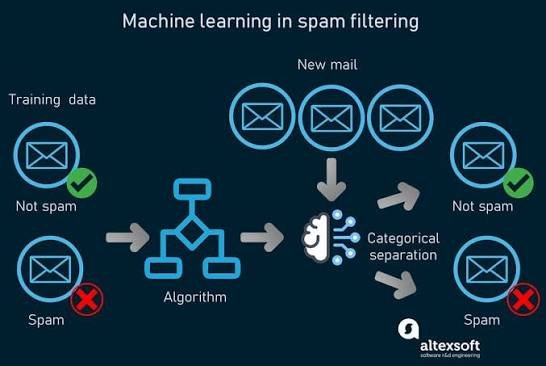
During training, the model receives examples and attempts to produce the correct output. When its prediction is wrong, an optimization process adjusts the model’s internal parameters. After seeing many examples, the network gradually becomes better at identifying patterns.
A common deep learning architecture contains three main types of layers:
- Input layer: Receives the original information.
- Hidden layers: Process the information and identify increasingly complex patterns.
- Output layer: Produces the final prediction or result.
The hidden layers are particularly important. Each layer transforms the information before passing it to the next one. This allows the network to learn relationships that may be too complicated to describe with manually written rules.
Training can require enormous amounts of computing power, especially for large models. Modern systems often use powerful graphics processing units (GPUs) or specialized AI hardware to perform the calculations efficiently.
Deep Learning vs. Machine Learning
Deep learning is a part of machine learning, but the two approaches are not exactly the same.
Traditional machine learning often requires humans to select or prepare important features from the data. For example, if a system is being developed to identify objects in photographs, developers may need to determine which visual characteristics should be considered.
Deep learning can reduce the need for this manual feature engineering. Given enough suitable training data, a deep neural network can learn useful features automatically.
This difference does not mean deep learning is always better. Traditional machine learning can be more practical when datasets are small, computing resources are limited, or interpretability is particularly important.
Deep learning generally becomes more attractive when there is a large amount of data and the task involves complicated patterns.
Major Types of Deep Learning Networks
Different deep learning architectures are designed for different kinds of problems.
Convolutional Neural Networks
Convolutional Neural Networks, commonly called CNNs, have traditionally been widely used for image-related tasks. They can identify visual patterns such as edges, textures, shapes, and objects.
CNNs have been applied to image classification, facial recognition, medical imaging, object detection, and many other computer vision applications.
Recurrent Neural Networks
Recurrent Neural Networks, or RNNs, were designed to handle sequential information. They can take previous information into account when processing the next part of a sequence.
This made RNNs useful for tasks involving text, speech, and time-series data. However, newer architectures such as transformers have become dominant in many language-related applications.
Transformers
Transformers have dramatically changed modern artificial intelligence, particularly in natural language processing. They can analyze relationships between different parts of an input and process information efficiently.
Many modern language models are based on transformer architectures. Their influence extends beyond text to areas such as image generation, speech processing, video analysis, and multimodal AI.
Applications of Deep Learning
Deep learning is no longer limited to research laboratories. It is being used across a wide range of industries.
Healthcare
In healthcare, deep learning can assist with analyzing medical images, identifying patterns in patient data, and supporting researchers in areas such as drug discovery.
For example, models can be trained to recognize potentially important features in X-rays, CT scans, or other medical images. These systems are generally designed to assist professionals rather than replace medical judgment.
Finance
Financial institutions use machine learning and deep learning techniques for tasks such as fraud detection, risk analysis, customer service, and market-related modeling.
A system can examine large volumes of transactions and identify unusual patterns that might otherwise be difficult to detect manually.
Autonomous Vehicles
Self-driving and driver-assistance technologies rely heavily on AI. Deep learning can help vehicles understand information from cameras, radar, lidar, and other sensors.
The technology can contribute to recognizing pedestrians, vehicles, road signs, lanes, and other objects surrounding a vehicle.
Natural Language Processing
One of the most visible applications of deep learning is language technology. Search engines, translation systems, chatbots, writing assistants, and voice interfaces can use deep learning to understand and generate human language.
Modern language models can process large quantities of text and learn statistical relationships between words, phrases, and broader concepts.
Entertainment
Streaming platforms can use AI to understand user preferences and recommend movies, shows, music, or other content. Deep learning can also be used in image generation, video production, speech synthesis, and game development.
Advantages of Deep Learning
One major advantage of deep learning is its ability to handle highly complex data. Images, audio, and natural language contain enormous numbers of relationships that can be difficult to capture using simple rules.
Another advantage is automatic feature learning. Instead of requiring developers to manually identify every important characteristic, deep neural networks can discover useful representations during training.
Deep learning models can also improve significantly as the quantity and quality of training data increase. This scalability has contributed to their success in modern AI applications.
At the same time, deep learning is not a magic solution. More data does not automatically guarantee a better model. The quality of the data, training process, architecture, and evaluation methods all matter.
Challenges and Limitations
Despite its impressive capabilities, deep learning has several important limitations.
The first is its dependence on data. Large and well-prepared datasets can be expensive and time-consuming to collect. If training data contains errors or bias, the resulting model may reproduce those problems.
Computational requirements can also be significant. Training large models may require specialized hardware, substantial electricity, and considerable financial resources.
Another challenge is interpretability. Some deep learning models contain millions or billions of parameters, making it difficult to explain exactly why a particular prediction was produced.
There are also concerns surrounding privacy, security, copyright, bias, and the responsible use of AI. As deep learning becomes more powerful, developers and organizations need to consider not only what these systems can do but also how they should be used.
The Future of Deep Learning
The future of deep learning is likely to involve systems that are more capable, efficient, and flexible. Researchers are working on models that can learn from fewer examples, require less computing power, and handle multiple types of information at once.
Another important direction is explainable and trustworthy AI. As these systems become part of healthcare, finance, education, transportation, and other sensitive areas, people need better ways to understand their limitations and evaluate their decisions.
Deep learning may also become more accessible. Tools and hardware are making it easier for businesses, developers, students, and researchers to experiment with AI without building everything from scratch.
However, technological progress will need to be accompanied by responsible development. Better models alone cannot solve issues related to poor data, unfair outcomes, privacy, or misuse.
Frequently Asked Questions About Deep Learning
1. What is Deep Learning in simple words?
Deep Learning is a type of artificial intelligence that enables computers to learn patterns from data using layered neural networks. Instead of relying entirely on rules written by humans, the system learns from examples and uses what it has learned to make predictions or perform tasks.
2. Is Deep Learning the same as AI?
No. Artificial intelligence is the broader field of creating systems capable of performing tasks associated with human intelligence. Machine learning is a major part of AI, while deep learning is a specialized branch of machine learning that uses multi-layer neural networks.
3. What is Deep Learning used for?
Deep learning is used for image recognition, speech recognition, language processing, recommendation systems, medical image analysis, fraud detection, autonomous driving technologies, content generation, and many other applications.
4. Does Deep Learning require a lot of data?
Deep learning models often perform best when they have access to large amounts of high-quality training data. However, the amount of data required depends on the task, model, and training approach. Techniques such as transfer learning can reduce the amount of data needed for some applications.
5. What is a neural network?
A neural network is a mathematical model made up of interconnected processing units called neurons. These units are organized into layers and transform input data to produce an output. Deep neural networks contain multiple hidden layers.
6. Is Deep Learning difficult to learn?
Learning the basics is possible for beginners, but advanced deep learning requires knowledge of programming, mathematics, statistics, and machine learning concepts. Starting with Python, basic linear algebra, probability, and introductory machine learning can provide a strong foundation.
7. What is the difference between Deep Learning and traditional programming?
Traditional programming generally involves humans explicitly defining rules that a computer follows. In deep learning, developers provide data and a training process that allows the model to learn patterns and relationships from examples.
8. What is the future of Deep Learning?
The future of deep learning is expected to include more efficient models, multimodal systems, improved AI assistants, better automation, and new applications across science and industry. At the same time, responsible development will remain important because AI systems can create risks when their data, design, or deployment is poorly managed.
Conclusion
Deep Learning has transformed the way computers process information. By using layered neural networks to learn complex patterns from data, it has enabled major advances in computer vision, language processing, healthcare, finance, transportation, and many other fields.
Its strength comes from its ability to learn representations from large and complicated datasets, but that strength also creates challenges involving computing costs, data quality, transparency, and responsible use.
For anyone interested in artificial intelligence, understanding deep learning is an important starting point. The technology is still evolving, and its future applications could have an even greater impact on how people work, communicate, learn, and interact with technology.