
Introduction
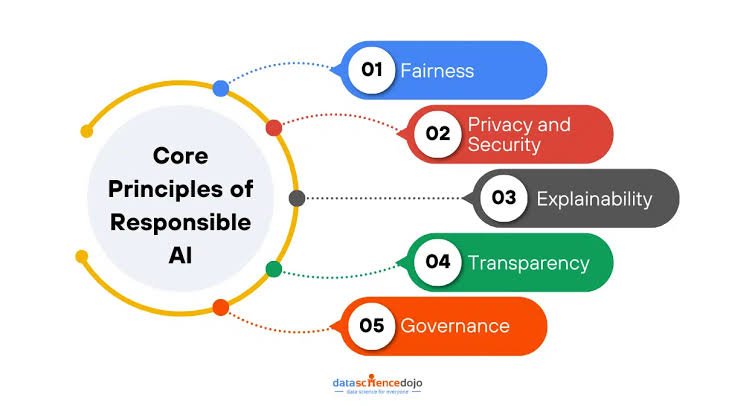
Responsible AI is becoming increasingly important as artificial intelligence continues to influence our daily lives.
It focuses on developing and using AI systems in a safe, fair, and ethical manner.
The main goal is to ensure that technology benefits people without causing unnecessary harm.
Responsible AI encourages transparency, accountability, privacy, and respect for human rights.
By following these principles, organizations can build trust and create a better digital future.
1. Understanding Responsible AI
Responsible AI refers to the thoughtful design, development, and use of artificial intelligence technologies.
It ensures that AI systems operate according to ethical values and human needs.
The purpose is not only to improve efficiency but also to protect individuals and communities.
Organizations must consider the possible effects of their AI tools before introducing them.
This includes understanding how automated systems make decisions and produce results.
Responsible AI also encourages developers to identify potential risks at an early stage.
By adopting responsible practices, businesses can reduce harmful outcomes.
Ultimately, it helps make artificial intelligence more reliable and beneficial for society.
2. Importance of Ethical AI Development
Ethical AI development is essential for creating technologies that respect human values.
Developers should consider fairness, honesty, safety, and accountability throughout the development process.
An AI system should not be designed only to achieve business goals.
It must also consider the people who may be affected by its decisions.
Ethical practices can help prevent discrimination and the misuse of personal information.
They also encourage organizations to evaluate the social impact of their products.
When ethics become part of development, technology can serve a wider range of people.
This approach supports innovation while maintaining public confidence in AI systems.
3. Fairness and Reducing Bias
Fairness is one of the most important principles of Responsible AI.
Artificial intelligence systems can sometimes produce biased results because of their training data.
For example, a recruitment tool may unfairly favor certain applicants over others.
Such problems can affect opportunities in education, employment, healthcare, and financial services.
Developers should examine their datasets to identify missing information and unfair patterns.
They should also test AI systems with people from different backgrounds.
Regular assessments can help identify and correct unfair outcomes.
A fair AI system aims to provide equal treatment and avoid unjust discrimination.
4. Transparency in Artificial Intelligence
Transparency means making AI systems understandable to the people who use or are affected by them.
People should know when artificial intelligence is involved in important decisions.
Organizations should explain the purpose of their systems and their major limitations.
Clear information helps users understand how AI-generated results should be interpreted.
Transparency is especially important in areas such as healthcare, banking, and education.
It allows people to question decisions that appear incorrect or unfair.
Although some AI models are difficult to explain fully, meaningful explanations are still valuable.
Greater transparency helps build confidence between technology providers and the public.
5. Accountability for AI Decisions
Accountability means that people and organizations remain responsible for how AI systems are developed and used.
Artificial intelligence should not become an excuse for avoiding responsibility.
Companies need clear procedures for monitoring their systems and handling mistakes.
Developers, managers, and decision-makers should understand their respective responsibilities.
When an AI tool causes harm, organizations should investigate the issue carefully.
They should take corrective action and communicate important findings to affected users.
Human oversight is particularly important when decisions have serious consequences.
Strong accountability practices encourage safer innovation and more trustworthy AI solutions.
6. Data Privacy and Security
Responsible AI requires careful protection of personal and confidential information.
Many AI systems depend on large amounts of data to perform their tasks.
If this information is collected or stored improperly, people may face privacy risks.
Organizations should collect only the information they genuinely need.
They must also protect data against unauthorized access, theft, and misuse.
Clear privacy policies help users understand how their information is handled.
Security testing and appropriate access controls can reduce potential vulnerabilities.
Protecting personal data is essential for maintaining trust in artificial intelligence.
7. Human Oversight and Control
Human oversight ensures that people can supervise AI systems and intervene when necessary.
Even advanced artificial intelligence can make mistakes or misunderstand complex situations.
Human judgment is therefore important in high-impact areas such as medicine and law.
Professionals should review AI recommendations instead of accepting every result automatically.
Organizations should establish procedures for challenging or correcting automated decisions.
Users must also understand the limitations of the tools they rely on.
Human involvement can help identify errors that automated checks may overlook.
Keeping people involved supports safer decisions and preserves human responsibility.
8. Safety and Reliability of AI Systems
Safety and reliability are necessary for responsible artificial intelligence.
An AI system should perform consistently under the conditions for which it was designed.
Developers need to test their products before making them available to the public.
Testing should include unusual situations, possible failures, and security weaknesses.
Organizations should continue monitoring systems after deployment.
If problems appear, they must respond quickly and improve the technology.
Reliable AI should communicate uncertainty rather than present every answer as unquestionably correct.
These measures help reduce risks and improve the quality of AI-powered services.
9. Responsible AI in Business
Businesses increasingly use artificial intelligence to improve productivity and support decision-making.
AI can help companies analyze information, assist customers, and automate repetitive tasks.
However, organizations must consider the ethical consequences of these applications.
They should avoid using AI in ways that mislead customers or unfairly treat employees.
Business leaders need policies that guide the responsible use of AI tools.
Employees should receive training on appropriate usage and potential risks.
Regular reviews can help ensure that business practices remain consistent with organizational values.
Responsible AI allows companies to pursue innovation while protecting their customers and reputation.
10. Responsible AI in Education and Healthcare
Artificial intelligence offers useful opportunities in education and healthcare.
In education, it can support personalized learning and help teachers identify learning difficulties.
In healthcare, AI tools may assist professionals in analyzing medical information.
However, incorrect recommendations can have serious consequences in both fields.
Educational systems must protect student information and avoid unfair assessments.
Healthcare providers should carefully evaluate AI recommendations before making clinical decisions.
Qualified professionals must remain involved in important judgments affecting individuals.
Responsible implementation can improve services while keeping human needs at the center.
11. Challenges in Implementing Responsible AI
Implementing Responsible AI can be difficult because technology and social expectations continue to change.
Organizations may struggle to identify every possible risk before a system is released.
Biased datasets, limited resources, and complicated models can create additional challenges.
Different countries may also have different rules governing artificial intelligence.
Small organizations may find comprehensive testing and monitoring expensive.
Another challenge is balancing rapid innovation with careful risk management.
Cooperation among developers, policymakers, researchers, and communities can help address these issues.
Continuous learning and improvement are necessary to make responsible AI practices more effective.
12. The Future of Responsible AI
The future of Responsible AI will depend on how carefully society manages technological progress.
As AI systems become more capable, their influence on everyday activities may continue to grow.
Organizations will need stronger methods for evaluating fairness, safety, and reliability.
Governments and industry leaders will also play important roles in setting appropriate standards.
Public awareness can help people make informed decisions about AI-powered products.
Developers should consider human rights and social consequences from the beginning of each project.
Responsible practices can encourage innovation without overlooking potential harm.
With ongoing collaboration, artificial intelligence can become a more trustworthy tool for future generations.
Conclusion
Responsible AI is essential for ensuring that artificial intelligence serves people in a fair and safe way.
It promotes transparency, accountability, privacy, reliability, and human oversight.
Organizations must evaluate risks and consider the possible effects of their AI systems.
Developers, businesses, governments, and users all have a role in encouraging responsible practices.
By making ethical considerations a priority, society can build a more trustworthy future with AI.
Frequently Asked Questions (FAQs)
1. What is Responsible AI?
Responsible AI is the development and use of artificial intelligence in ways that prioritize fairness, safety, transparency, privacy, and accountability. Its purpose is to ensure that AI benefits people while minimizing potential harm.
2. Why is Responsible AI important?
Responsible AI helps reduce bias, protect personal information, improve system reliability, and maintain public trust. It also encourages organizations to consider the ethical and social consequences of automated decisions.
3. How can organizations implement Responsible AI?
Organizations can implement Responsible AI by testing systems for bias, protecting sensitive data, explaining important decisions, maintaining human oversight, and regularly monitoring performance. They should also establish clear policies and assign responsibility for AI-related decisions.