
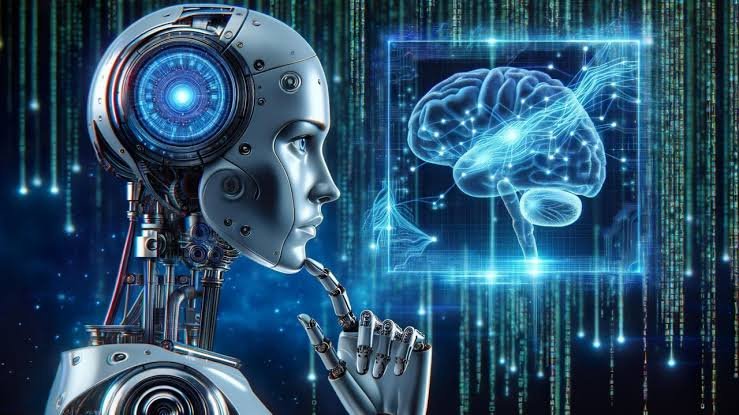
Artificial intelligence has moved from being a futuristic idea to becoming an important part of everyday life. From smartphones and online shopping to healthcare, education, finance, and business, intelligent technologies are changing the way people work and make decisions. At the heart of this transformation is AI Innovation, a rapidly developing field that focuses on creating smarter systems, improving existing technologies, and finding new ways to solve real-world problems.
AI innovation is not simply about building machines that can perform tasks. It is about using technology to make processes faster, more accurate, more efficient, and sometimes more creative. As artificial intelligence continues to develop, businesses and individuals are discovering opportunities that were difficult to imagine only a few years ago.
What Is AI Innovation?
AI innovation refers to the development and practical use of new artificial intelligence technologies, methods, and applications. It includes everything from machine learning and natural language processing to computer vision, generative AI, robotics, and intelligent automation.
Traditional software generally follows instructions written by humans. AI systems, on the other hand, can analyze large amounts of information, recognize patterns, learn from data, and produce useful predictions or responses. AI innovation takes these capabilities further by finding new applications and improving how intelligent systems interact with people and the world around them.
For example, an AI-powered customer service system can understand questions, identify customer needs, and provide appropriate answers. In healthcare, AI can help professionals analyze medical images or organize patient information. In manufacturing, intelligent systems can identify equipment problems before they lead to expensive failures.
These examples show that AI innovation is not limited to one industry. It has the potential to influence almost every area of modern society.
Why Is AI Innovation Important?
One of the biggest reasons AI innovation matters is its ability to handle tasks that would take humans significant amounts of time. Modern organizations often collect enormous quantities of information, but analyzing that information manually can be difficult. AI can process data quickly and identify patterns that might otherwise remain hidden.
Another important benefit is automation. Repetitive tasks can consume valuable time for employees. Intelligent automation can handle many routine processes, allowing people to focus on responsibilities that require communication, judgment, creativity, and strategic thinking.
AI innovation can also improve decision-making. Businesses can use AI to analyze customer behavior, market trends, and operational data. Instead of relying entirely on assumptions, decision-makers can use data-driven insights to understand potential outcomes.
However, the value of AI is not only measured in speed and efficiency. The technology can also create completely new products, services, and ways of interacting with technology.
AI Innovation in Business
Businesses across different industries are exploring artificial intelligence to improve their operations. One common application is personalized customer experiences.
Online platforms can use AI to understand customer preferences and recommend products, services, or content. This can make digital experiences more relevant while helping companies understand what their customers actually want.
AI is also being used for marketing. Businesses can analyze large datasets to identify trends, segment audiences, and improve campaigns. Generative AI can assist with creating drafts, ideas, summaries, and other forms of content, although human review remains important.
Another area is business automation. AI-powered systems can assist with scheduling, document processing, customer support, data analysis, and other administrative tasks. When implemented correctly, these systems can reduce unnecessary workloads and allow employees to spend more time on higher-value activities.
Small businesses can benefit from AI innovation as well. Intelligent tools are becoming increasingly accessible, allowing smaller teams to use technologies that were previously available mainly to large organizations.
AI Innovation in Healthcare
Healthcare is another area where AI innovation has significant potential. Medical professionals deal with enormous amounts of information, including medical records, test results, images, and research.
AI can assist in analyzing this information and identifying patterns. For example, computer vision systems can help examine medical images, while machine learning models can support research and risk assessment.
AI can also contribute to drug discovery and medical research by helping researchers analyze complex datasets. This does not mean that AI replaces doctors or researchers. Instead, it can provide additional tools that support professional expertise.
The healthcare sector also highlights an important principle of AI innovation: technology must be developed responsibly. Patient privacy, accuracy, safety, transparency, and human oversight are essential when AI is used in sensitive environments.
AI Innovation in Education
Education is changing as technology becomes more personalized. AI can help students receive learning experiences that better match their individual needs.
An intelligent learning system can analyze a student’s progress and identify areas where additional practice may be useful. AI assistants can also help explain difficult concepts, generate practice questions, and provide feedback.
Teachers may benefit as well. AI can assist with administrative work, lesson preparation, research, and the organization of educational materials. This can give educators more time to focus on teaching and interacting with students.
At the same time, schools need to consider how AI should be used. Students should learn how to work with intelligent tools without becoming completely dependent on them. Critical thinking, creativity, communication, and independent learning remain essential skills.
Generative AI and the Next Wave of Innovation
Generative AI has become one of the most visible developments in artificial intelligence. Unlike systems designed only to classify or predict information, generative models can create new content such as text, images, audio, video, and computer code.
This capability is changing creative and professional workflows. Writers can use AI to brainstorm ideas, developers can receive coding assistance, designers can explore concepts, and businesses can produce early drafts of marketing materials.
But generative AI also introduces challenges. AI-generated information can sometimes be inaccurate, biased, or misleading. People therefore need to review important outputs rather than automatically treating AI responses as facts.
The future of AI innovation will likely involve greater cooperation between humans and intelligent systems. Instead of thinking about AI simply as a replacement for people, it can be more useful to view it as a tool that can extend human capabilities.
Challenges of AI Innovation
Despite its benefits, AI innovation comes with serious challenges. One concern is privacy. AI systems often require large amounts of data, and organizations must ensure that personal information is collected and used responsibly.
Another issue is bias. If an AI model is trained using biased or incomplete data, its results may also be unfair or inaccurate. Developers need to test systems carefully and consider how their technologies affect different groups of people.
Job disruption is another important concern. Automation can reduce the need for certain repetitive tasks, potentially changing employment patterns. At the same time, new roles can emerge around AI development, management, oversight, and implementation.
There is also the question of trust. People need to understand when they are interacting with AI and how important decisions are being made. Transparency and human oversight can help build confidence in intelligent systems.
The Future of AI Innovation
The future of AI innovation is likely to be shaped by a combination of technological progress and responsible development. AI systems are becoming more capable, but capability alone is not enough. Organizations must also think about safety, fairness, privacy, accountability, and the real needs of users.
We may see AI becoming more deeply integrated into everyday software, workplaces, homes, transportation, scientific research, and public services. Intelligent systems could become less visible while becoming more useful, operating behind the scenes to help people complete tasks and make informed decisions.
The organizations most likely to benefit from AI may not necessarily be those that adopt the largest number of AI tools. Instead, success may come from identifying meaningful problems and using AI where it genuinely provides value.
Ultimately, AI innovation is about more than technology. It is about finding better ways to solve problems and helping people accomplish things that were previously difficult, expensive, or time-consuming. When developed and used responsibly, artificial intelligence can become a powerful driver of progress.
Frequently Asked Questions
1. What is AI Innovation?
AI innovation is the development and practical application of new artificial intelligence technologies and ideas. It includes areas such as machine learning, generative AI, robotics, natural language processing, and computer vision. Its goal is to create better ways of solving problems and improving processes.
2. How is AI Innovation changing businesses?
AI innovation helps businesses automate repetitive tasks, analyze large amounts of data, improve customer experiences, personalize services, and support decision-making. It can also help companies develop new products and services while making existing operations more efficient.
3. Is AI Innovation going to replace human workers?
AI may automate some tasks and change certain jobs, but it does not necessarily mean that all human workers will be replaced. In many situations, AI works best as a tool that supports people. New jobs and responsibilities can also develop as businesses adopt new technologies.
4. What are the main challenges of AI Innovation?
Major challenges include data privacy, security, bias, inaccurate outputs, ethical concerns, and potential job disruption. Responsible development, careful testing, transparency, and human oversight are important for reducing these risks.
5. What does the future of AI Innovation look like?
The future is expected to involve deeper integration of AI into everyday software, businesses, research, healthcare, education, and other industries. As AI becomes more capable, responsible use and human oversight will remain important for ensuring that the technology creates meaningful benefits.
Conclusion
AI innovation is transforming the relationship between people and technology. Its influence can already be seen in business, healthcare, education, entertainment, manufacturing, and countless other fields.
The technology offers major opportunities for greater efficiency, personalization, creativity, and discovery. However, these opportunities come with responsibilities. Privacy, fairness, accuracy, security, and human oversight must remain central to the development of AI.
As artificial intelligence continues to evolve, the most important question may not be how advanced AI can become, but how wisely people choose to use it. The future of AI innovation will ultimately depend on combining technological progress with human judgment, creativity, and responsibility.