
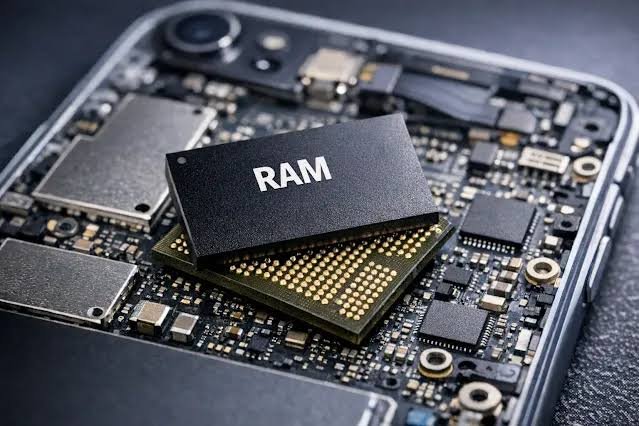
When buying a new smartphone, one specification that often attracts attention is RAM. You might see phones advertised with 8GB, 12GB, 16GB, or even 24GB of RAM, making it difficult to determine how much memory you actually need. Manufacturers frequently highlight larger numbers, but does having more RAM really make your phone faster?
The answer depends on how you use your smartphone. Someone who primarily sends messages, browses social media, and watches videos has different requirements from a mobile gamer, content creator, or user who regularly runs demanding applications.
In 2026, smartphone RAM requirements are also influenced by increasingly sophisticated apps, multitasking features, mobile gaming, and on-device artificial intelligence. However, buying a phone with the highest RAM capacity is not always the smartest decision, particularly if you want to get the best value for your money.
This guide explains what smartphone RAM does, how much you need for different activities, and what to consider before purchasing your next phone.
What Is RAM in a Smartphone?
RAM stands for Random Access Memory. It is the temporary working memory your smartphone uses to run the operating system, keep applications active, and handle tasks currently being performed.
For example, imagine browsing the internet while listening to music and receiving messages. Your smartphone uses RAM to manage these activities and help you switch between applications without repeatedly starting everything from scratch.
When a phone has sufficient RAM, it can generally keep more apps and their data available in the background. This can make multitasking smoother and reduce the frequency with which applications need to reload.
However, RAM is only one part of smartphone performance. The processor, software optimization, storage speed, cooling system, and operating system also affect how responsive a phone feels.
A smartphone with 8GB of RAM and an efficient processor may provide a better everyday experience than a poorly optimized device with 12GB of RAM.
How Much RAM Do You Need in 2026?
For most Android buyers in 2026, 8GB to 12GB of RAM is a sensible target, depending on budget and intended use. More demanding gaming and AI workloads may benefit from 12GB or more, while lighter users can often manage with less.
Here is a practical breakdown.
| RAM capacity | Best suited for | Overall recommendation |
|---|---|---|
| 4GB | Basic calls, messages, and light use | Limited for a new phone |
| 6GB | Everyday apps and moderate use | Acceptable on a tight budget |
| 8GB | Social media, browsing, streaming, and multitasking | Good choice for most users |
| 12GB | Heavy multitasking, gaming, and demanding apps | Excellent all-round option |
| 16GB | Intensive gaming, advanced multitasking, and some AI workloads | Best for specific demanding needs |
| 24GB or more | Specialized gaming phones and niche workloads | Unnecessary for most people |
These are general buying guidelines rather than strict technical limits. Actual performance depends on the phone’s hardware, software, and memory management.
1. Is 4GB RAM Enough for a Smartphone?
Four gigabytes of RAM may be sufficient for a very basic smartphone used primarily for calls, text messages, and occasional web browsing. However, it is a limited configuration for someone purchasing a phone intended to last several years.
Modern apps can consume substantial memory, especially when several applications run together. On a phone with 4GB of RAM, switching between a browser, social media, messaging, and a game may cause some applications to reload more frequently.
This does not automatically mean that every 4GB phone will be slow. A lightweight operating system and modest app usage can help. Nevertheless, performance may become less consistent as applications and operating systems grow more demanding.
Should you buy a 4GB phone in 2026?
Consider one only if your budget is extremely limited and your requirements are basic. If you can afford a phone with 6GB or preferably 8GB of RAM, that may be a more practical long-term choice.
2. Is 6GB RAM Enough for Everyday Use?
Six gigabytes of RAM can handle many everyday smartphone activities, including messaging, social media, browsing, email, video streaming, and light gaming.
For someone who mainly uses a phone for communication and entertainment, this capacity may provide a satisfactory experience, especially when the software is well optimized.
The limitations become more noticeable when you frequently switch between demanding applications or keep numerous browser tabs open. Background apps may be removed from memory, meaning you might need to wait for them to reload when returning to them.
If you are buying an inexpensive smartphone, 6GB can be a reasonable compromise. However, compare it with similarly priced 8GB models before making a decision.
Who should choose 6GB RAM?
- Students with basic smartphone requirements.
- People who mainly use messaging, email, and video apps.
- Budget-conscious buyers who do not regularly play demanding games.
If you expect to keep your phone for four or five years, consider spending a little more for additional RAM when the other specifications and software support are comparable.
3. Is 8GB RAM the Sweet Spot in 2026?
For many Android users, 8GB of RAM offers a strong balance between price and performance.
It is generally suitable for everyday activities such as browsing, watching videos, using social media, navigating with maps, attending video calls, and switching between several common apps.
Eight gigabytes can also be enough for many mobile games, although the most demanding titles may benefit from a stronger processor and additional memory.
Another advantage is that you do not necessarily need to pay for premium hardware to get an 8GB configuration. It is often available across a broad range of smartphone price categories.
That said, RAM alone cannot guarantee smooth performance. A phone with 8GB of RAM but a weak processor or poorly optimized software may still struggle with intensive workloads.
Who should choose 8GB RAM?
- Most everyday smartphone users.
- Students and office workers.
- People who use social media and streaming apps regularly.
- Casual and moderate mobile gamers.
- Buyers looking for a good balance between price and performance.
If you want one straightforward recommendation for a typical Android phone in 2026, start by looking at models with 8GB of RAM.
4. Is 12GB RAM Worth Paying More For?
Twelve gigabytes of RAM can be a worthwhile upgrade if you regularly perform demanding tasks or want additional memory headroom.
For example, you may frequently switch between a browser with multiple tabs, productivity apps, video-editing software, messaging platforms, and large games. Additional memory can help the system keep more applications active rather than reloading them as often.
It can also be relevant when considering newer AI features. Google lists 12GB or more RAM among the requirements for certain advanced Android AI capabilities, alongside other hardware and software requirements. This does not mean every AI feature requires 12GB, but it illustrates why memory requirements can differ between features. Source: Android
However, moving from 8GB to 12GB does not automatically make every application run faster. If your everyday activities already fit comfortably within 8GB, the practical difference may be small.
Who should choose 12GB RAM?
- Heavy multitaskers.
- People who play graphics-intensive mobile games.
- Users who edit photos and videos on their phones.
- Buyers interested in demanding on-device AI features.
- People who want additional memory capacity for more demanding future apps.
If the price difference is modest and the rest of the phone is equally good, 12GB can be a sensible upgrade.
5. Do You Really Need 16GB RAM?
Sixteen gigabytes of RAM sounds impressive, but it is more than many smartphone users need.
This capacity can be useful on high-end devices designed for intensive gaming, advanced multitasking, specialized productivity features, or certain memory-intensive AI applications. It may also provide additional room for applications to grow more demanding over time.
Nevertheless, most routine smartphone tasks do not require 16GB of RAM. Messaging, browsing, video streaming, photography, and ordinary social media use can work well with substantially less memory.
There is also an important distinction between having additional memory and being able to use it effectively. If the processor, software, or application does not benefit from the extra capacity, the additional RAM may provide little noticeable improvement.
Who should choose 16GB RAM?
Consider it if you are buying a premium gaming phone, regularly work with demanding applications, or have a specific feature that benefits from additional memory. Otherwise, compare the upgrade cost against improvements to the camera, battery, processor, display, and storage.
6. What About Smartphones With 24GB RAM or More?
Some specialized gaming phones and performance-focused devices offer 24GB of RAM or higher advertised capacities.
These configurations are primarily aimed at enthusiasts and users who want extensive memory headroom. They can be useful in certain demanding workloads, but they are rarely necessary for ordinary smartphone use.
A phone with 24GB of RAM will not automatically open apps twice as fast as a phone with 12GB. Application performance depends on numerous factors, including processing power, memory bandwidth, thermal management, and software optimization.
You should also check whether the advertised figure represents physical RAM or includes a virtual memory expansion feature.
For most people, spending extra on a higher-quality processor, better cameras, longer software support, or a larger battery is likely to deliver more noticeable everyday benefits than upgrading from 16GB to 24GB of RAM.
7. How Much RAM Do You Need for Mobile Gaming?
Gaming is one area where RAM requirements can vary significantly.
Casual games and less demanding titles can run comfortably on many phones with 6GB or 8GB of RAM. More demanding 3D games may benefit from 8GB to 12GB, while gaming-focused phones with 12GB or 16GB can offer additional headroom for demanding applications and multitasking.
However, RAM is not the only factor affecting gaming performance.
The processor and graphics hardware determine much of a game’s rendering capability. Cooling affects how consistently the phone can sustain performance during long sessions, while the display influences resolution and refresh rate.
A smartphone with 8GB of RAM and a powerful processor may deliver a better gaming experience than a phone with 16GB of RAM and weaker graphics hardware.
Before purchasing a gaming phone, consider:
- Processor and GPU: These are essential for graphics performance and frame rates.
- Cooling: Effective thermal management helps maintain performance during longer sessions.
- Display: Check the resolution, refresh rate, and touch responsiveness.
- Battery: Demanding games can consume significant power.
- RAM: Choose enough memory for the games you play and the multitasking you expect.
For most mobile gamers, 8GB to 12GB is a sensible starting point. Consider 16GB if you regularly play demanding games and the overall device justifies the additional cost.
8. Does AI Make More Smartphone RAM Necessary in 2026?
Artificial intelligence is becoming an increasingly important part of the smartphone experience. Features can include image editing, text summarization, voice assistance, translation, photo enhancement, and other intelligent tools.
Some AI tasks run primarily in the cloud, while others use models that operate directly on the device. On-device processing can offer benefits such as reduced reliance on an internet connection and improved privacy for certain operations.
Running AI models locally can require additional memory, but the exact requirements depend on the model, software implementation, and specific feature.
Google’s current Android information identifies 12GB or more RAM as one requirement for certain advanced AI capabilities. Other requirements, such as a qualifying processor and software support, also matter. Source: Android
This does not mean every smartphone needs 12GB or 16GB of RAM simply because AI features are available.
If you plan to use advanced on-device AI tools extensively, checking the requirements of the particular features you want is more useful than assuming a higher RAM figure will guarantee compatibility.
For everyday users who mainly rely on cloud-based assistants and standard applications, 8GB may still be sufficient.
9. Does More RAM Make Your Phone Faster?
Not necessarily.
RAM helps a smartphone manage active applications and workloads. When a device has enough memory for its current activities, adding more RAM may have little effect on its perceived speed.
Other components play equally important roles.
- Processor: Determines how efficiently the phone performs calculations and runs demanding applications.
- Storage: Influences app loading, file access, and data-transfer performance.
- Software optimization: Affects how efficiently the operating system and applications use available resources.
- Cooling: Helps prevent performance reductions caused by excessive heat.
- Battery condition: On some devices, battery health and power management can influence peak performance.
For example, upgrading from 4GB to 8GB may make a noticeable difference when a phone frequently reloads applications. Upgrading from 12GB to 16GB may offer little improvement if your normal activities do not use the extra capacity.
The goal is not to buy the maximum amount of RAM. It is to choose a device with enough memory for your workload and a balanced combination of hardware and software.
10. RAM vs. Storage: What Is the Difference?
RAM and storage are two different specifications that are easy to confuse when shopping for a smartphone.
RAM is the temporary working memory used while applications and system processes are running.
Storage is where your apps, photos, videos, downloaded files, and other data are saved for long-term use.
For example, a smartphone with 8GB of RAM and 256GB of storage has 8GB of physical RAM for working memory and 256GB of storage capacity for saving data.
Neither number replaces the other. A phone can have plenty of storage but insufficient RAM for your multitasking needs, or plenty of RAM but limited space for photos and apps.
When choosing a new smartphone, consider both specifications separately.
For many users, 8GB of RAM paired with 256GB of storage is a practical combination, provided the device offers good overall performance and the price fits the budget.
11. What Is Virtual RAM, and Is It Useful?
Some Android manufacturers advertise virtual RAM, RAM expansion, or memory extension features.
These features typically use part of the phone’s internal storage to support memory management. They do not create additional physical RAM with the same performance characteristics as actual memory chips.
Virtual RAM may help the system manage certain workloads, depending on the device and implementation. However, internal storage is generally slower than physical RAM, so this feature should not be treated as a direct substitute for buying a phone with more physical memory.
For example, a phone advertised as having 8GB of physical RAM plus 8GB of virtual RAM does not become equivalent to a device with 16GB of physical RAM.
If two otherwise comparable phones are available, prioritize the amount of physical RAM. Treat virtual RAM as a supplementary feature rather than the main reason to purchase a device.
12. How Much RAM Do iPhones Need?
iPhones handle memory somewhat differently from Android devices because Apple’s hardware and software are designed together.
Apple does not consistently publish RAM capacity in its standard iPhone specification sheets, so reported capacities often come from independent technical investigations rather than official consumer-facing specifications.
For example, MacRumors reported in September 2026 that the iPhone 18 Pro and iPhone 18 Pro Max have 12GB of RAM, based on information from Xcode 27. Source: MacRumors
However, you should not compare iPhones and Android phones using RAM figures alone. Differences in operating systems, hardware, application behavior, and memory management make direct comparisons difficult.
When purchasing an iPhone, prioritize its supported features, processor, battery life, camera system, storage capacity, and software support. If a particular AI or professional feature is important to you, check its specific device requirements.
For ordinary activities such as messaging, browsing, photography, and streaming, buying the latest supported iPhone that fits your budget is generally more useful than choosing a device solely because of its reported RAM capacity.
13. How Much RAM Will Help Your Smartphone Last Longer?
If you plan to keep your smartphone for several years, buying enough RAM for your expected usage is worth considering.
Apps and operating systems change over time, and future versions may require more resources. Additional memory can provide flexibility as your multitasking habits or app requirements evolve.
However, more RAM does not guarantee a longer usable lifespan. Battery degradation, software support, processor performance, storage capacity, physical damage, and repair costs can all determine how long a smartphone remains practical to use.
For a new Android phone intended to last several years, 8GB is a reasonable starting point for most people, while 12GB offers additional headroom if the price difference is sensible.
Before purchasing, also check how long the manufacturer promises operating-system and security updates. A phone with ample RAM but limited software support may not be the best long-term investment.
14. Common Mistakes to Avoid When Choosing Smartphone RAM
A few common mistakes can lead buyers to spend more than necessary.
Buying the Highest RAM Capacity Available
More RAM can be useful, but it does not automatically improve every aspect of performance. Choose based on your needs rather than the largest number advertised.
Ignoring the Processor
A powerful processor can make a significant difference to gaming, camera processing, and demanding applications. Do not sacrifice overall hardware quality just to get extra RAM.
Confusing Virtual RAM With Physical RAM
Storage-based memory expansion is not equivalent to physical RAM. Check the manufacturer’s specifications to understand what is actually included.
Overlooking Software Support
Long-term operating-system and security updates are important when buying a phone you intend to keep for several years.
Assuming All Phones Use Memory Equally
Android and iOS manage resources differently, and individual manufacturers can implement different memory-management strategies. RAM figures should be considered alongside real-world performance and device-specific features.
Frequently Asked Questions
Is 8GB RAM enough for a smartphone in 2026?
For most everyday Android users, yes. Eight gigabytes is generally suitable for browsing, messaging, social media, streaming, and moderate multitasking. Demanding games and certain AI features may benefit from additional memory.
Is 12GB RAM better than 8GB?
It provides more memory headroom and can help with demanding multitasking. However, the improvement depends on your applications and usage habits. If you mainly perform basic tasks, the difference may not justify a higher price.
Is 16GB RAM overkill for a phone?
For many people, yes. It can be useful for intensive gaming, demanding applications, and certain on-device AI workloads, but it is unnecessary for most everyday activities.
Can I play games on a phone with 6GB RAM?
Yes, many casual and moderately demanding games can run on a phone with 6GB of RAM. Performance also depends on the processor, GPU, cooling, and the individual game’s requirements.
Does RAM affect camera quality?
RAM can help the phone handle image processing and demanding camera workloads, but it is not the main factor determining photo quality. The camera sensor, lens, image-processing hardware, and software are also important.
Is 4GB RAM enough for WhatsApp, YouTube, and browsing?
It may be sufficient for light use, but multitasking can be more limited, and apps may reload frequently. For a new phone in 2026, choosing more physical RAM is preferable when affordable.
Will more RAM improve battery life?
Not necessarily. Battery consumption depends on several factors, including the processor, display, signal strength, software, and workload. More RAM alone does not guarantee better battery life.
Final Verdict: How Much RAM Should You Buy in 2026?
The right amount of smartphone RAM depends on how you use your device, how long you plan to keep it, and how much you want to spend.
For most buyers, the following recommendations are a useful starting point:
- 4GB: Only for very basic use or extremely limited budgets.
- 6GB: Suitable for light users who want an affordable smartphone.
- 8GB: The best starting point for most Android users.
- 12GB: A strong choice for heavy multitasking, gaming, and certain advanced AI features.
- 16GB or more: Best reserved for demanding workloads and specialized use cases.
If you want a balanced smartphone without spending unnecessarily, start by comparing models with 8GB of physical RAM. Consider 12GB if you frequently multitask, play demanding games, or want support for specific memory-intensive features.
Most importantly, do not judge a smartphone by RAM alone. A good processor, reliable battery, sufficient storage, quality display, capable cameras, and long-term software support can be just as important.
The bottom line: In 2026, most smartphone users do not need the highest RAM capacity available. They need enough memory to run their favorite apps smoothly, a well-optimized device, and hardware that delivers good value for the money.